1917-1967
Violetta Parra
1917-1967
Violetta Parra
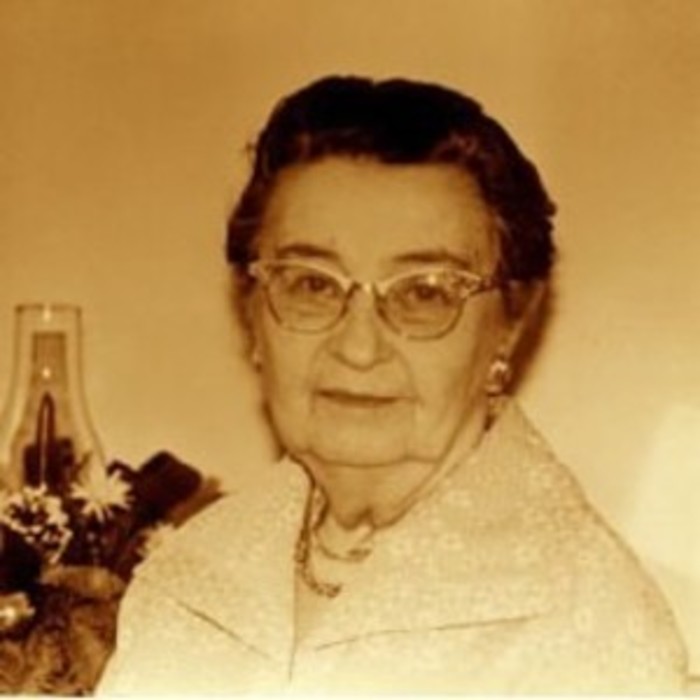
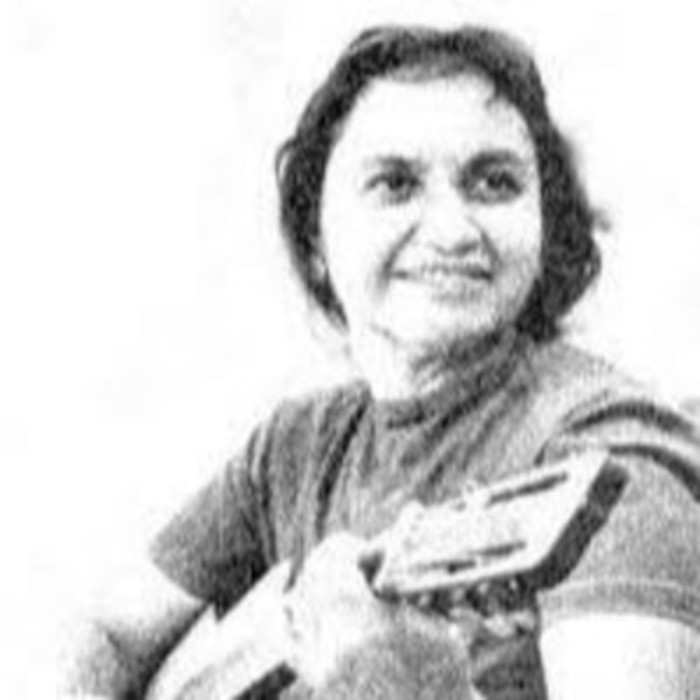
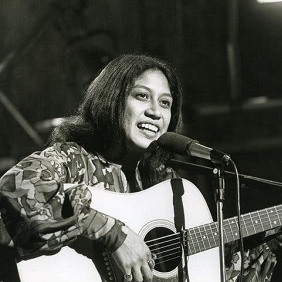
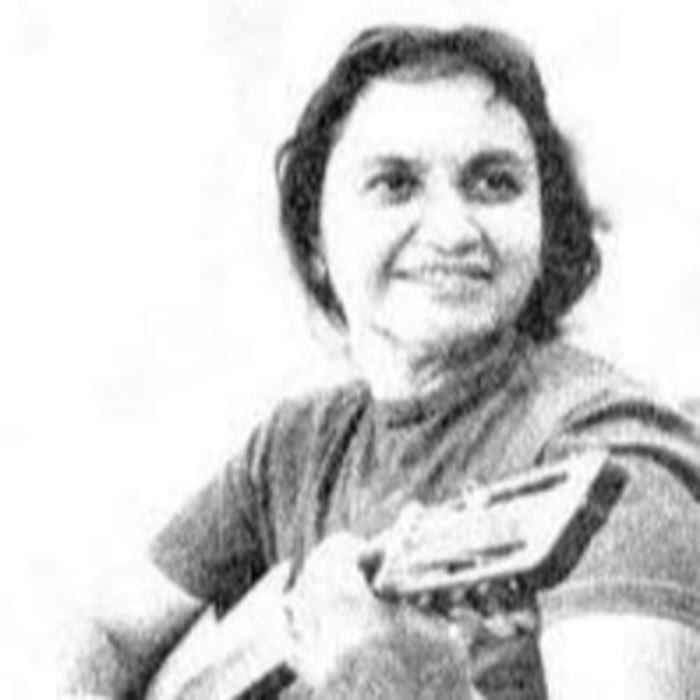
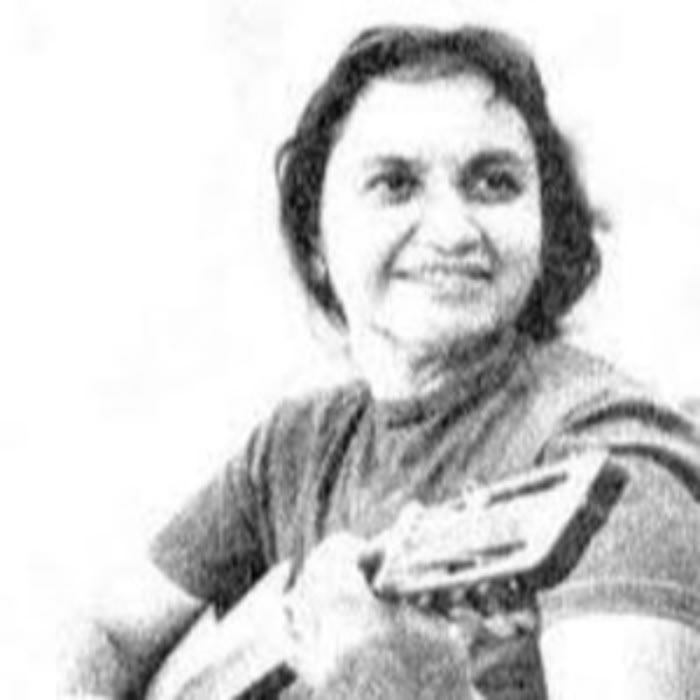
Violetta Parra was a Chilean composer, singer-songwriter, folklorist, ethnomusicologist, social activist, and visual artist. She set the basis for Nueva Canción Chilena, a renewal and a reinvention of Chilean folk music. She was born Violeta del Carmen Parra Sandoval on October 4, 1917, in San Fabián de Alico, near San Carlos, a small town in southern Chile. One of nine children. Violetta grew up in a musical family, her father, Nicanor Parra Alarcón, was a music teacher, and her mother, Clarisa Sandoval Navarrete was a seamstress, but often sang and played the guitar. Both Violetta’s parents taught her and her siblings traditional folk songs, and many of her siblings went on to pursue the arts. Her brother Nicanor Parra was a notable modern poet, better known as the "anti-poet", and her other brother Roberto Parra became a fellow folklorist. Violeta Parra's family lived in poverty and was constantly moving throughout her childhood in search of work. In 1927, the family moved to Chillán, and it was here that Violetta started singing and playing the guitar with her siblings Hilda, Eduardo, and Roberto. They quickly began composing traditional Chilean music, but after their father died in 1929 from tuberculosis, Violetta and her siblings had to work to help support the family. They began performing in nightclubs, in the Mapocho district, Violetta and her siblings played many different styles, interpreting boleros, rancheras, Mexican corridos, and more.
In 1934, Violetta met Luis Cereceda, a railway driver, they were married and had two children, Isabel (born 1939) and Ángel (born 1943). Her husband was very political and at his side, Violetta became part of the progressive movement in Chile. During this time Violetta continued her music, she sang songs in Spanish in restaurants and, theatres, calling herself Violeta de Mayo. In 1948, after ten years of marriage, Parra and Luis Cereceda separated, and Parra and her sister Hilda began singing together as "The Parra Sisters". In 1949, Violeta met and married Luis Arce, and had two daughters Carmen Luisa, and Rosita Clara. In 1952, Violetta encouraged by her brother Nicanor, began to collect and document authentic Chilean folk music, she eventually collected more than 3,000 songs, folk tales, and proverbs. Parra wanted the whole world to know and appreciate the value of Chile’s traditional folk music. She became a well-known expert in Chile and gave recitals at universities, was invited to teach courses in folklore at the University of Iquique, and was presented at the Chilean-French Institute. During this time Violetta begun to abandon her old folk-song repertoire and started composing her own songs based on traditional folk forms. Inspired by the authentic folk Chilean music she had been studying, Violetta learned to play the guitarrón, a traditional Chilean guitar-like instrument with 25 strings. And in 1954 she hosted a successful radio program Sing Violeta Parra for Radio Chilena.
Violetta Parra bw
In 1955 Violeta was invited to the World Festival of Youth and Students, in Warsaw, Poland, after some time in Europe she moved to Paris, where she performed in nightclubs. She traveled to London to record several albums for the EMI-Odeon label and radio broadcasts. But Parra’s stay in Paris was cut short by the sudden death of her youngest daughter, and she returned to Chile in 1956. Violetta continued to record music during this time, in 1957 she recorded the first LP of the series The Folklore of Chile, Violeta Parra and her Guitar (Canto y Guitarra), which included three of her own compositions. And she followed up with a second volume of The Folklore of Chile in 1958, Acompañada de Guitarra, and in 1959 released La cueca and La tonada. Still passionate about exposing Chilean traditional folk music to the world, Parra founded the National Museum of Folkloric Art (Museo Nacional de Arte Folklórico) in Concepción in 1958. She also spent time during this period composing many décimas, a Latin American poetry form for which she is also known for. In the following years, Parra continued giving recitals in major cultural centers in Santiago, and traveled the country to research, organize concerts, and give lectures about folklore. She wrote the book Cantos Folklóricos Chilenos, which gathered all her research conducted so far. In 1963 she recorded in Paris, revolutionary and peasant songs, which would be published in 1971 under the title Songs rediscovered in Paris. She began playing the cuatro, an instrument of Venezuelan origin, and the charango, an instrument of Bolivian origin. In addition to her work in music and poetry, Violetta was also a gifted ceramist, painter, and arpillera embroiderer. As a result of severe hepatitis in 1959 that forced her to stay in bed, she found a passion for painting, she exhibited her oil paintings and arpilleras at the Outdoor Exhibition of Fine Arts in Santiago's Parque Forestal. In 1961, she traveled to Buenos Aires, Argentina, where she exhibited her paintings, gave recitals, and recorded an album of original songs. And in April 1964 she did an exhibition of her arpilleras, oil paintings and wire sculptures in the Museum of Decorative Arts of the Louvre, the first solo exhibition of a Latin American artist at the museum.
By the 1960s, a new generation of musicians was playing folk music and popularizing it, and among them were Violeta’s eldest children, Isabel and Angel Parra. Violeta felt she needed to get back to her roots, so she revived her own version of the Peña (now known as "La Peña de Los Parra"), a community center for the arts and for political activism. Her tent hosted musical spectacles where she often sang with her children, and she and her children also lived on the same land. And in 1965 she also established her own cultural center La Carpa de la Reina, a space where she wanted to build “The University of Folklore”. That same year, Parra also participated in numerous national television programs and signed a contract with Radio Minería, and released the LP La Carpa de La Reina in 1966. It was during this time that Violeta would compose her masterpiece, the album “Las últimas composiciones.” (The Last Compositions of Violeta Parr). The album contained Parra’s most popular work "Gracias a la Vida". The song wasn’t popularized in Latin America until 1971, when it was covered by Mercedes Sosa, and later in Brazil by Elis Regina and in the US by Joan Baez. To this day it remains one of the most covered Latin American songs in history, having been recorded by artists like Michael Buble, Kacey Musgraves, Adriana Mezzadri, and more. Soon after the release of Parra’s last album, she committed sucice on February 5th of 1967.
Though Violetta Parra didn’t live to see the impact her research and music left on Chile and the world, she’s acknowledged as the “Mother of La Nueva Canción,” a movement of political folk music that swept Latin America in the coming years, is considered one of the most important members of the Chilean folklore history, and her birthdate October 4, would go on to become "Chilean Musicians' Day". She was an inspiration for several Latin-American artists, such as Victor Jara, Héctor Pavez, and Gabriela Pizarro. In 1992, the Violeta Parra Foundation was founded by her children with the goal to organize and highlight Parra's unpublished work to the world.