1902-1984
Bessie Jones
1902-1984
Bessie Jones
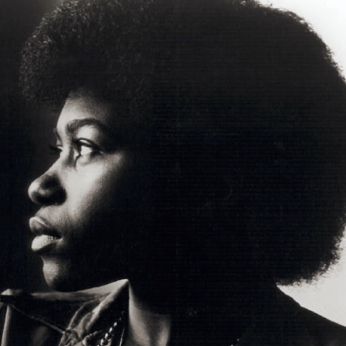
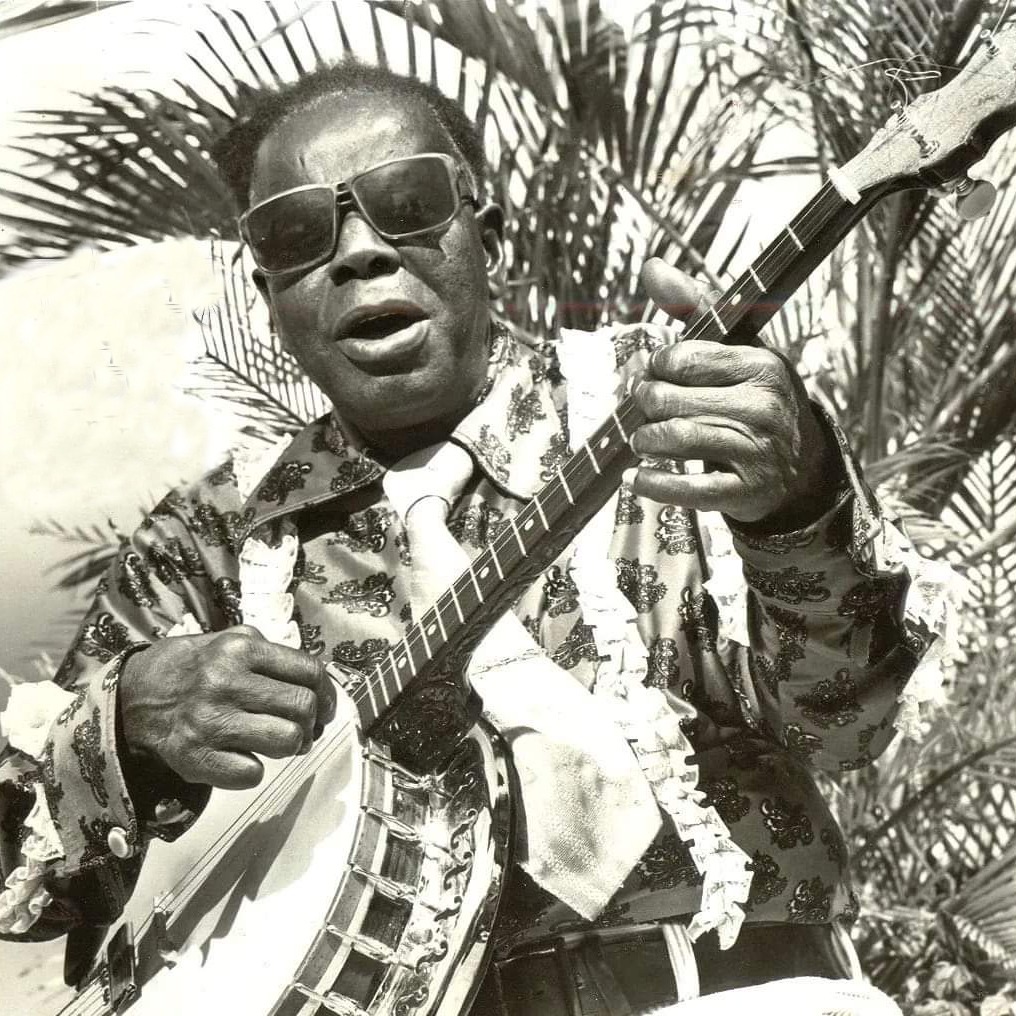
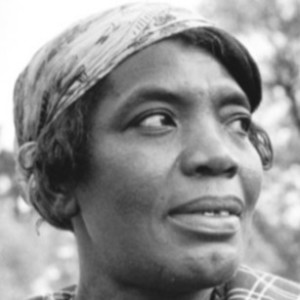
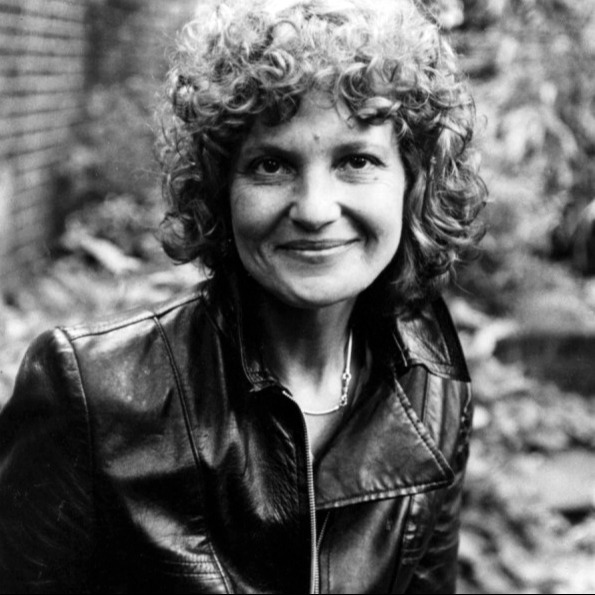
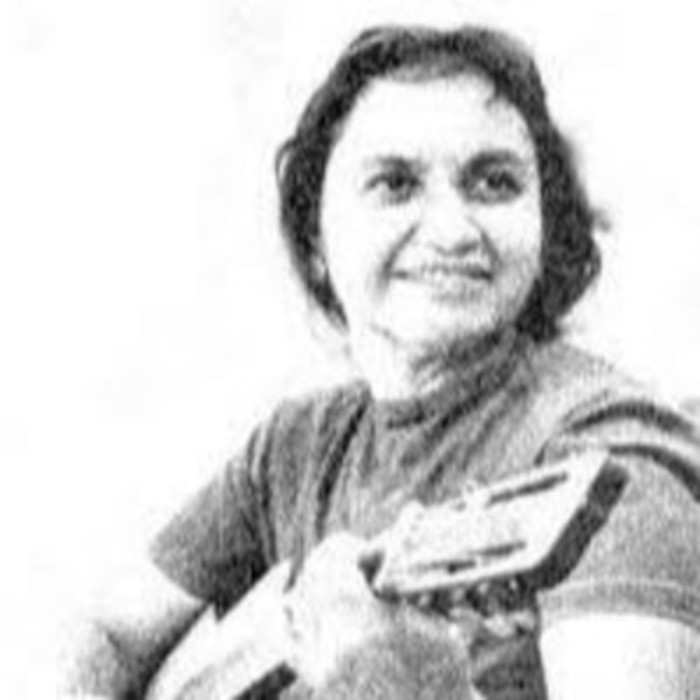
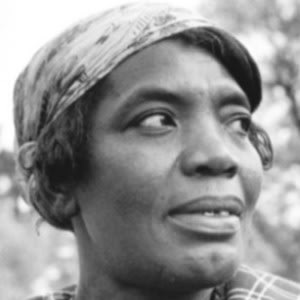
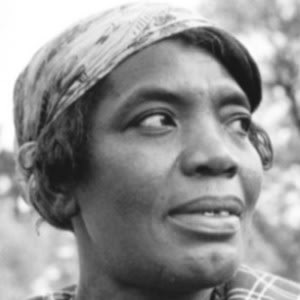
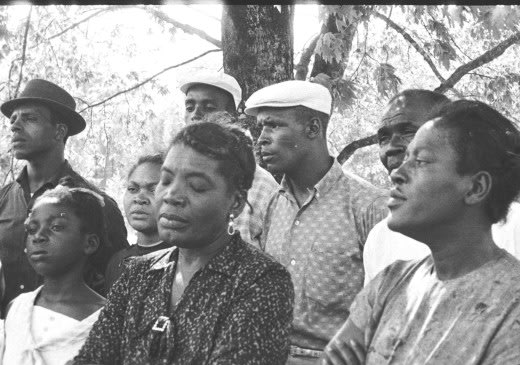
Bessie Jones was an American gospel and folk singer credited with helping to bring folk songs, games, and stories to wider audiences in the 20th century. She was born Mary Elizabeth on February 8, 1902, in Smithville, Georgia. Bessie was surrounded by music at an early age, her mother, Julia, often sang, danced, and played the autoharp, and all the men in her extended family sang or played the guitar or banjo, which they made themselves. Her grandfather, Jet Sampson was a former slave born in Africa, and taught her many songs he would sing in the fields. As a child, Bessie attended school sporadically, it was singing that served as her primary source of education at Bessie’s community church service on Sundays. On weekdays, when the meeting house was transformed into the schoolroom, hymns, and school songs and children have always sung, danced, made up riddles, games.
When Bessie was only nine years old, she got her first job doing childcare, she loved children and often those in her community the stories, games, dances, and spiritual music she’d inherited from her grandfather.
“Non sint qui ullamco proident laboris cupidatat nisi duis ut amet ut ea laborum.”
Somebody
Bessie Jones
In 1914 Bessie Jones became the mother of a daughter, Rosalie, and was married, but her husband, Cassius, died a few years later. In 1924, Jones traveled to Florida, where she spent the next seven years working various jobs as a domestic, laundress, agricultural worker, and cook. In 1928 she moved to Okeechobee where she worked as a cook, here she met and married her second husband, George Jones, who came from St. Simons. In 1933 she and George decided to settle on St. Simons Island, where Bessie’s second child, George L., was born in 1935, and her third, Joseph, in 1937. On the island, Jones worked as a nurse from 1939 to 1945 and joined the Spiritual Singers of Coastal Georgia, an ensemble dedicated to the preservation of the ways of their forbears when her husband George died. Over the next decade, Jones continued her work with the Spiritual Singers and continued to sing and tell the stories of her ancestors before her.
In 1959 Jones met folklorist Alan Lomax who was conducting fieldwork in the Georgia sea islands to collect the music of the Spiritual Singers Society. In 1960, Lomax recruited the Sea Islanders for a film about the music of the Colonial Williamsburg era. The filmmaking was an emotional experience for Jones, as her grandfather had been enslaved in Virginia, but Jones felt that it was her duty to spread the word of her ancestors so, in 1961, she moved to New York City with Alan Lomax and asked him to document her music and life history. In 1963, she teamed up with the rest of the singers from The Georgia Sea Island Singers and began to perform and tour extensively, in clubs, concerts, and festivals around the country, including Carnegie Hall, Central Park, the Smithsonian Institution’s Folklife festivals and the Newport Folk Festival. In 1964 the group was featured in the Sing for Freedom Workshop along with SNCC Freedom Singers. Bernice Johnson Reagon, of the SNCC Freedom Singers and the well-known leader of Sweet Honey in the Rock, would go on to say that her meetings with Bessie Jones and the Sea Island Singers changed her life.
During this time Jones also participated in a prayer band that traveled during the Civil Rights Movement, marching with Dr. Martin Luther King, Jr. in Beulah, Mississippi. Jones’s desire to spread the history of her ancestors led to a 1964 workshop at the State University of California which demonstrated games, dances, and songs of the Negro South. Taking her journey a step further to reach wider audiences Jones published the book Step It Down in 1972, and in 1973, she released her first solo album, 'So Glad I'm Here', followed by 'Step It Down' in 1975. She released the film Georgia Sea Island Singers in 1964, which features performances of the sacred songs: “Moses,” “Yonder Come Day,” “Buzzard Lope” (“Throw Me Anywhere, Lord”), “Adam in the Garden Picking up Leaves”, and “Down in the Mire” (“Bright Star Shinning in Glory”).
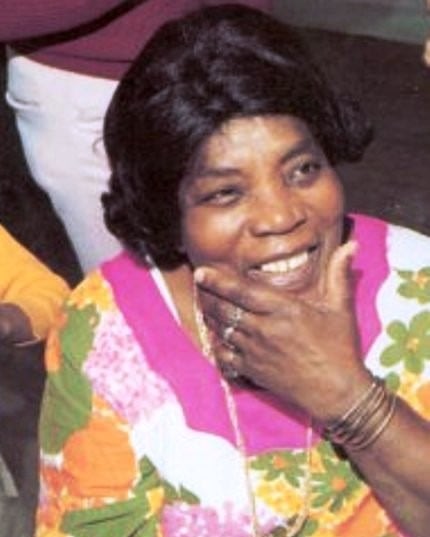
Bessie Jones continued singing with the Georgia Sea Island Singers in the 1970s, participating in public ceremonies at schools and festivals throughout the nation, most notably at the 1976 inauguration of President Jimmy Carter. She was awarded many of folk music's premiere honors, including a 1982 National Endowment for the Arts National Heritage Fellowship and the Duke Ellington Fellowship at Yale University. She died on July 17, 1984, due to complications from leukemia.