1942-
Bernice Johnson Reagon
1942-
Bernice Johnson Reagon
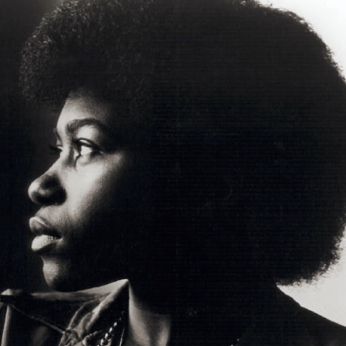
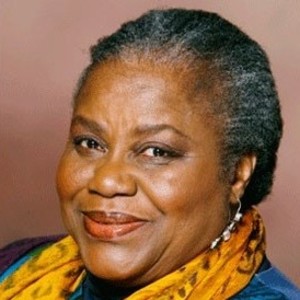
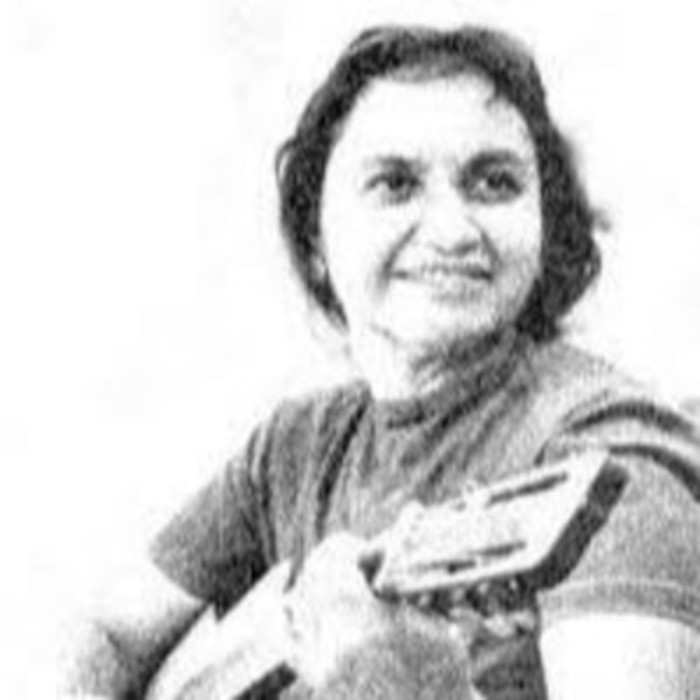
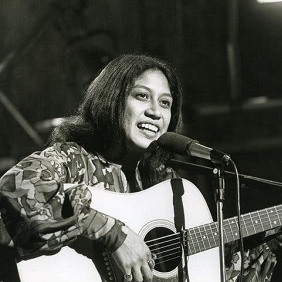
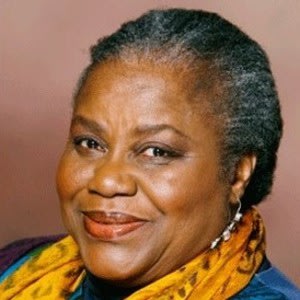
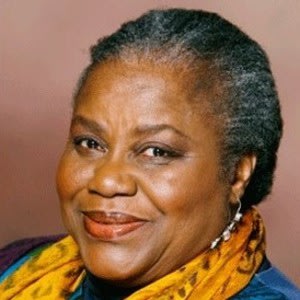
Bernice Johnson Reagon, singer, song leader, civil rights activist, and scholar, has profoundly contributed to African American culture for over half a century. Though perhaps best known as the founder of the women's group Sweet Honey in the Rock, Bernice Johnson Reagon is also a noted political activist, Distinguished Professor at Washington's American University, and a curator emeritus at the Smithsonian Institution. Bernice Johnson was the third child of Beatrice and J.J. Johnson, a Baptist minister. She was born on October 4, 1942, and raised in southwest Georgia. Reagon began school at the age of three and by the time she was in fourth grade, was tutoring the younger students. Reagan was drawn to music early on, with her father a minister Reagon grew up in the church, which heavily influenced her musical upbringing. The church did not have a piano, so Reagon’s early music was a cappella, and her first instruments were her hands and feet, she explains, "that's the only way I can deal comfortably with creating music." Reagon joined her first gospel choir when she was just eleven years old and would listen to the local radio station WGPC to learn black gospel for the choir to recite. In addition to her time spent in church, Bernice’s schooling was also heavily involved with music. Her teacher would often lead the students outside to play games based on singing with their hands and feet. In 1959, Bernice entered Albany State College where she began her study of music and became involved in political activities. Some of her musical role models included Harriet Tubman, Sojourner Truth, and Bessie Jones, and Bernice’s singing style and repertoire are grounded in her experiences in church, school, and political activism.
Bernice only spent a short time at Albany State College, she participated in the student sit-in movement of the spring of 1960 and was expelled after an arrest as an activist. During this time Bernice became active in Albany’s NAACP Youth Council and spent a semester at Spelman College in Atlanta. In 1962 along with Cordell Reagon, Rutha Harris, and Charles Neblett, Bernice founded the SNCC (Student Nonviolent Coordinating Committee) Freedom Singers. The SNCC was the first group of freedom singers to travel nationally, the group toured to raise money for SNCC projects and utilized singing as an outlet for protest. The group sang at political meetings and jails and also appeared at the 1963 March on Washington. The Freedom Singers were a catalyst for the Albany Singing Movement, which helped create vital change in the early 1960s protests of the Civil Rights era. Bernice married the group’s co-founder Cordell Reagon, and in 1964 left the Freedom Singers to bear her daughter, Toshi Reagon, who would grow up to become an accomplished musician. During this time Bernice also recorded her first solo album, Folk Songs: The South, with Folkways Records in 1965, and in 1966 was a founding member of the Atlanta-based Harambee Singers.
BerniceJohnsonReagonOlder
For the next several years Johnson Reagon continued to record music, researched traditional African American songs and stories, and organized folk festival tours. Through the SNCC Freedom Singers and her own work, Bernice became a strong and respected song leader in the Civil Rights Movement. She returned to Spelman College to complete her undergraduate degree in 1970, and after receiving a Ford Foundation fellowship for graduate study at Howard University, she was awarded a Ph.D. in 1975. While she attended school Johnson Reagon was also the vocal director of the D.C. Black Repertory Theater, and in 1973 she formed the internationally renowned African American women’s a Cappella ensemble Sweet Honey In The Rock. The group performed acappella music, ranging from traditional folk, African chant, field hollers, and Baptist hymns to blues, jazz, and rap music, toured internationally, and recorded many albums. Sweet Honey in the Rock utilized their unique sound to address political and personal issues. And in 1985 they coordinated the closing cultural festivities for the United Nations Decade for Women Conference in Nairobi, Kenya. Johnson Reagon led the group until her retirement in early 2004.
In 1974, Reagon was appointed as a cultural historian in music history at the Smithsonian Institution, and in 1983 she was promoted to curator at the National Museum of American History and established the Smithsonian’s Program in Black American Culture. Her projects there included a three-record collection called Voices of the Civil Rights Movement: Black American Freedom Songs, 1960–66, and the Wade in the Water. After Reagon retired in 1993, she continued to work in African American Songs of Protest as a Curator Emeritus. She held an appointment as a Distinguished Professor of History at American University in Washington DC from 1993 to 2003. And Johnson Reagon has since been named Professor Emerita of History at AU and holds the title of Curator Emeritus at the Smithsonian. In addition to her work in history, Dr. Johnson Reagon also served as a music consultant, composer, and performer for several film and video projects, notably Eyes on the Prize (1987), The Civil War (1990), the Emmy-winning We Shall Overcome, and the feature film Beloved. She was also the conceptual producer and narrator of the Peabody Award-winning radio series, Wade in the Water, African American Sacred Music Traditions.
Johnson Reagon’s strongest musical collaborator is her daughter, Toshi Reagon. Collaboratively the duo has created two operas, the music for the Robert Wilson production, The Temptation of St. Anthony and Zinnias, The Life of Clementine Hunter, the music score for Africans in America; A Black Woman Speaks for HBO, and numerous studio recordings. Their latest project is an opera based on the novel Parable of the Sower by Octavia E. Butler. And whenever the opportunity presents itself, mother and daughter join each other on stage in live performances. In addition to her work in music Johnson Reagon has also released several publications including If You Don't Go, Don't Hinder Me: The African American Sacred Song Tradition, We Who Believe In Freedom: Sweet Honey In The Rock: Still on the Journey, and We'll Understand It Better By And By Pioneering African American Gospel Composers, Black People, and Their Culture. Reagon is revered as one of the top authorities in African American History. She is a recipient of the Heinz Award for Arts and Humanities, the MacArthur Fellowship, the Presidential Medal, the Charles E. Frankel Prize, and the Martin Luther King, Jr. Center for Nonviolent Social Change Trumpet of Conscience Award, among others. And in April 2009 Reagon received an honorary doctoral degree from the Berklee College of Music.
Bernice Johnson Reagon currently resides in Washington, DC, she has devoted her life to social justice through music via recordings, activism, community singing, and scholarship.As a composer, she has created a narrative of her social and political activism through her songs and larger compositions. To Reagon, music is a means for affecting change in society, instilling a sense of heritage and cultural pride, and creating solidarity in the face of adversity, uniting people while simultaneously celebrating their differences.